

Introduction: The Rise of Alternative Certification
In the fast-evolving landscape of modern education, traditional degrees are no longer the sole indicator of knowledge or skill. The 21st-century economy demands adaptability, continuous learning, and specialized expertise — qualities that rigid, long-term academic programs often struggle to provide.
Enter microcredentials and digital badges — flexible, targeted forms of certification that validate specific skills and competencies. These emerging tools are reshaping the way learners and employers perceive education, offering shorter, skill-focused alternatives to conventional qualifications.
According to the Digital Learning Institute (2024), microcredentials are one of the fastest-growing trends in global education, providing “bite-sized, stackable learning opportunities that meet the needs of both learners and employers.”
What Are Microcredentials and Digital Badges?
1. Understanding Microcredentials
A microcredential is a short, verified learning program that certifies a learner’s mastery of a specific skill or knowledge area. Unlike degrees or diplomas, which take years to complete, microcredentials can be earned in weeks or months, focusing on practical, job-relevant competencies.
For example:
- A teacher can earn a microcredential in “Digital Classroom Management.”
- A programmer might pursue one in “Python for Data Science.”
- A manager could acquire a microcredential in “Leadership in the Digital Age.”
Each course offers immediate, measurable outcomes — skills that can be applied directly in the workplace.
2. What Are Digital Badges?
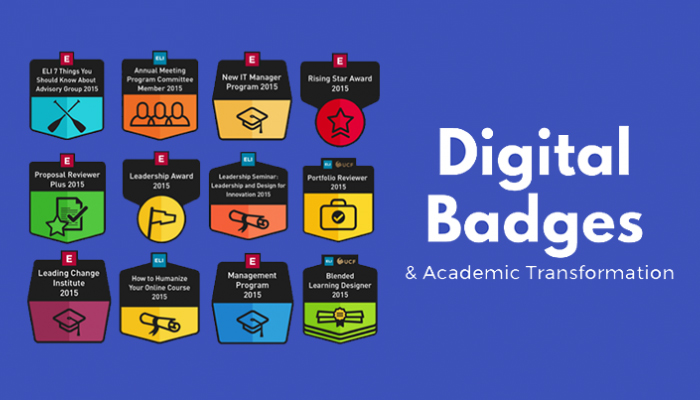
A digital badge is a visual representation of a microcredential, stored online and sharable through professional platforms like LinkedIn, CVs, or personal websites. Each badge includes metadata detailing:
- The issuing institution
- The learning outcomes
- The criteria for earning it
- Verification details
Digital badges are portable, transparent, and verifiable, allowing employers to instantly validate a candidate’s skills.
Why Microcredentials Matter in Today’s Education System
1. Bridging the Skills Gap
One of the main challenges in modern education is the gap between academic qualifications and real-world job requirements. Employers often struggle to find candidates with practical, up-to-date skills.
Microcredentials directly address this issue by:
- Aligning learning objectives with industry demands
- Offering targeted skill acquisition instead of broad theoretical knowledge
- Allowing professionals to upskill continuously as technologies evolve
For instance, companies in AI, cybersecurity, and digital marketing prefer candidates who demonstrate specific technical proficiencies rather than general degrees.
2. Empowering Lifelong Learning
Learning no longer ends with graduation. The modern workforce requires constant adaptation to new technologies and systems. Microcredentials support lifelong learning by:
- Allowing individuals to learn at their own pace
- Offering modular, stackable courses that build toward larger qualifications
- Encouraging professionals to update their skills without pausing their careers
This flexibility makes microcredentials particularly attractive to working adults, parents, and entrepreneurs.
3. Promoting Equity and Accessibility
Traditional higher education is often expensive and time-consuming. Microcredentials provide a cost-effective alternative, opening doors for learners who might not afford a four-year degree.
Additionally:
- Many platforms like Coursera, edX, FutureLearn, and Udemy offer scholarships and free trials.
- Learners from developing countries can access global knowledge from leading universities like Harvard, MIT, and Stanford at minimal cost.
This democratization of education is helping bridge global learning divides.
The Role of Institutions and Employers
1. Educational Institutions
Many universities are now integrating microcredentials into their curriculum, offering hybrid models that combine traditional degrees with shorter skill-based certifications.
Examples include:
- HarvardX and MITx offer stackable credentials leading to MicroMasters programs.
- The University of Melbourne and University of London provide credit-bearing microcredentials that count toward full degrees.
This approach not only enriches student learning but also increases institutional relevance in an era dominated by digital transformation.
2. Employers and Industry Partners
Employers are increasingly recognizing microcredentials as evidence of practical competency. Major companies such as Google, IBM, and Microsoft have introduced their own microcredential pathways.
For instance:
- Google’s Career Certificates in IT, UX Design, and Data Analytics require no prior degree and are accepted by hundreds of employers.
- IBM’s SkillsBuild platform issues verified digital badges for cloud computing, cybersecurity, and AI.
This partnership between education and industry ensures learners acquire market-ready skills that translate directly into employment.
Technological Infrastructure Behind Digital Credentials
Microcredentials rely on secure, decentralized digital infrastructure to ensure authenticity.
Technologies like blockchain and Learning and Employment Records (LERs) provide verifiable, tamper-proof credentials that can be shared globally.
Key technologies include:
- Blockchain Verification: Ensures the credential’s integrity and authenticity.
- Open Badges Standard: Developed by Mozilla and IMS Global to make badges interoperable across platforms.
- Learning Management Systems (LMS): Platforms like Moodle, Blackboard, and Canvas integrate microcredential modules directly into courses.
This system allows employers and educational bodies to instantly validate credentials without bureaucratic delays.
Challenges and Criticisms of Microcredentials
Despite their promise, microcredentials face several challenges that must be addressed for widespread adoption:
1. Standardization Issues
Different institutions have varying definitions and quality levels for microcredentials. The lack of global accreditation standards makes it difficult for employers to compare or trust certain badges.
2. Over-Saturation
With thousands of online courses available, the market risks becoming flooded with low-quality or irrelevant certifications, diminishing the perceived value of legitimate ones.
3. Recognition and Awareness
In some regions, employers still prioritize traditional degrees over digital certifications. Building trust and awareness remains a gradual process.
4. Accessibility and Digital Divide
While online learning expands access, it also assumes internet availability and digital literacy — barriers that persist in many parts of the world.

Microcredentials and the Future of Work
The global job market is rapidly evolving due to automation, AI, and digital transformation. The World Economic Forum (2025) predicts that by 2030, half of all employees will require reskilling.
Microcredentials are perfectly positioned to meet this demand by:
- Providing quick, affordable re-skilling opportunities
- Enabling individuals to pivot careers without starting from scratch
- Helping organizations maintain a future-ready workforce
Companies are increasingly embedding microlearning programs within corporate training systems to keep employees competitive.
Microcredentials in Developing Countries
In Africa, Asia, and Latin America, microcredentials have the potential to bridge education and employment gaps.
In Rwanda, for example, the Ministry of Education is encouraging institutions to integrate digital literacy microcredentials aligned with national ICT goals.
Similarly, India’s National Skill Development Corporation (NSDC) promotes short-term skill badges for sectors like healthcare, agriculture, and IT services.
These initiatives demonstrate that microcredentials are not just a Western phenomenon — they are a global tool for empowerment.
How Learners Can Benefit
Here’s how learners can maximize the value of microcredentials:
- Choose Recognized Providers
Always select platforms accredited by universities or global organizations (e.g., edX, FutureLearn, Coursera). - Stack Credentials Strategically
Combine related badges to build a strong professional profile (e.g., “AI Foundations,” “Data Analytics,” and “Machine Learning Basics”). - Showcase Achievements
Display badges on LinkedIn, digital CVs, and personal websites to attract employers. - Keep Learning Continuously
Microcredentials are stepping stones — commit to regular upskilling to stay relevant in a changing economy.
Internal Links (WordPress SEO Optimization)
- 🔗 Read also: AI-Powered Personalized Learning: How Artificial Intelligence is Transforming Education
- 🔗 Explore: Competency-Based Assessments: The Shift from Rote Learning to Skills Mastery
- 🔗 Related: Teacher Training and Retention: Building the Backbone of Quality Education
- 🔗 Discover: EdTech Expansion and the Digital Transformation of Schools
Conclusion: A Paradigm Shift in Education
Microcredentials and digital badges represent more than just new forms of certification — they are symbols of a broader transformation in how we define learning, skills, and success.
They bridge the gap between education and employment, promote lifelong learning, and ensure that anyone, anywhere, can access quality, verifiable education tailored to modern realities.
In a world where adaptability is the key to survival, microcredentials empower learners not just to keep up — but to lead the way.
Suggested SEO Keywords
- microcredentials in education
- digital badges for learning
- online certification trends 2025
- alternative credentials for jobs
- lifelong learning pathways
- stackable learning
- education technology innovations
- future of skills training