
You’re not going to need to be a student professor for a college degree, but the format of this is SEO-friendly and has an engaging style that appeals to teachers and students alike. —.
# How to Prepare for P6 Mathematics Exams: A Complete Guide for Success. Many learners, pedagogues and parents are worried when they take the Primary Six (P6) Mathematics tests. This subject is one of the most important domains in the national tests, as it doesn’t just test math skills: it also encompasses logical thinking with real problem-solving skills and knowledge that can be applied in many different situations. However, given good practices every student can enter the P6 Mathematics exams armed with confidence. In this article, we discuss the detailed step-by-step tips that support a comprehensive way of studying for the P6 Mathematics exams by integrating study tips, practice approaches, revision strategies and emotional readiness. —.

## 1. Understand the Exam Format. The first step to planning will be to know what to expect. Most do not master Mathematics, just become confused when it comes to exams. Most of P6 Mathematics tests are comprised of:

- Multiple-choice questions to investigate rapid remembrance and accuracy. * Structured questions where calculations must be solved in steps. * Word problems that use mathematics in real-life situations. ### Why this matters:
Knowing the structure helps learners learn how to allocate their study time. For instance, a student with poor word problems can spend more time problem solving (story-based questions). Tip: You can consult teachers for exam papers, or look for them from the Rwanda Education Board (REB) to familiarize learners with this format. —.

## 2. Master the Core Topics. There’s a big variety of topics on the P6 syllabus. Students must determine and reinforce basic topics like:
- Numbers and Operations — Addition, subtraction, multiplication, and division of whole numbers, fractions, and decimals.
2. Geometry – Shapes, angles, perimeter, area, and volume.
3. Measurements – Units of length, mass, capacity, and time.
4. Algebra and Patterns – Solving simple equations and recognizing number patterns.
5. Statistics and Data Handling – Reading and interpreting graphs, charts, and tables.
6. Word Problems – Apply mathematical concepts to solve real-life situations. Tip: Put it all down on a list of topics and tick them off once they’re proficient. This ensures no area goes unpracticed. —.
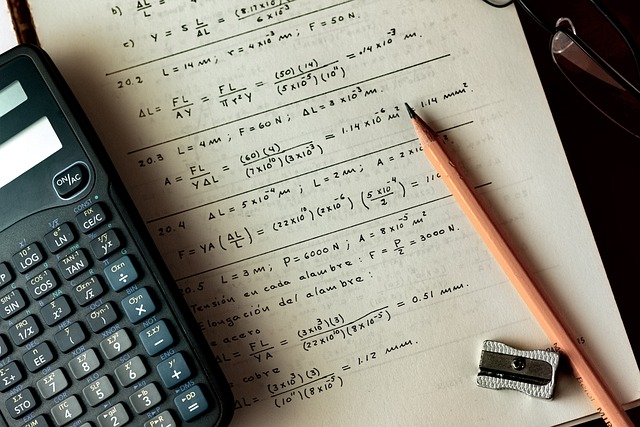
## 3. Build a Strong Foundation. In exams, many learners fail due to skipping over the basics. Without mastering multiplication tables for example, it is very complicated to solve fractions or algebraic equations. * Promote daily practice of times tables and simple operations. * Enhance mental math skills through flashcards or oral quizzes. * Break down big ideas into smaller steps. Example: Make sure the learner understands addition before teaching perimeter of a rectangle. —.
## 4. Practice with Past Papers. Exams can be very much based on past papers. They allow learners to:
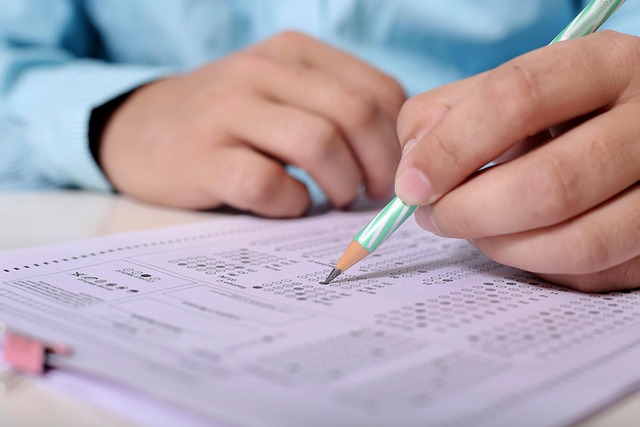
- Get used to the question style and wording. * Learn about time management in exams. * Find common errors and make the fixes. How to use past papers effectively:
- Solve questions specific to the topic (e.g., concentrate only on fractions). * Progress to solving full papers under timed conditions. * Review answers, and ask a teacher to explain where mistakes occurred. —. ##
5. Focus on Word Problems. Word problems typically confuse students, though they carry many marks. To succeed: - Teach students to read the question slowly and highlight important words. * Determine what the question is asking: Is it adding, subtracting or multiplying? * Before you begin the calculation, translate the words into numbers. Example: “John purchased 4 books at 1,500 RWF each. How much did he spend?” → Operation: Multiplication (4 × 1,500 = 6,000 RWF)
Tip: Practice daily with real-life problems such as shopping prices, distances, or cooking measurements. —

6. Manage Time Wisely During Study. Good preparation isn’t about days on end, but about making the best use of time. ### Recommended Study Plan for P6 Mathematics:
- Short sessions daily (30 to 45 minutes). Thematic focus per session. * Weekly revision day. Go over what was learned during the week. * Mock exam every two weeks. Time it for the learner to speed up. Tip: Don’t cram last-minute. Mathematics needs gradual execution, not fast rote learning. —

7. It should include visuals and Practical aids
Children in P6 usually learn better by the use of visuals.
- Explain geometry with drawings and diagrams.
- Do this measurement with real objects (bottles, rulers, clocks).
- Make charts and posters with formulas and rules.
Example: A chart with formulas like Area of a rectangle = length × width can be displayed in the study area for quick reference. —
8. Group Study and Peer Learning
Often learners comprehend concepts better when introduced to them in conjunction with another learner. Group study helps to:
- Exchange alternate solutions to solve problems.
- Confidence through peer teaching.
- To teach, motivate learners by establishing a community spirit.
Tip: Have small groups of 3-5 learners try to quiz one another on a simple number problem in order to encourage better retention. —
9. Work on Speed and Precision
Speed & accuracy – speed is important during exams as well as accuracy. Students need problem-solving practice quickly without making careless mistakes.
Strategies:
- Promote mental calculations before writing steps down.
- Teach pupils to quickly verify answers (e.g., employing inverse operations).
Example: If 56 ÷ 7 = 8, check by multiplying 8 × 7 = 56. —
10. Review Mistakes Carefully
Mistakes are part of learning. Rather than write off wrong answers, learners can simply do:
- Look at what led to the mistake (be it carelessness, misunderstanding, lack of knowledge).
- Redo the problem correctly.
- Copy the corrected approach into a custom “error notebook” for review before exams. —

11. Take Care of Emotional Readiness
Exams aren’t just about knowledge; they’re about confidence, focus. A learner who is anxious or stressed can even forget certain concepts.
How to relieve exam stress:
- Get the learners to get them more sleep before their exam.
- Have healthy food and if it is on exam day, give them a breakfast.
- Find words that will encourage them — “You are ready, and you’ll do well.”
- Teach relaxation techniques like deep breathing. —
12. Role of Parents and Teachers
Parents and teachers alike are essential to exam preparation.
- Teachers should educate, give explicit explanations and offer additional practice and feedback.
- Parents must establish an atmosphere of support, make sure the child is not pressured, and that their study time is respected.
Good tip for parents: Celebrate small successes (like getting better in one subject). Motivation is built for the learner as a result. —
13. Exam Day Tips
On the day of the exam itself, learners should:
- Arrive early to avoid stress.
- Read instructions carefully before responding.
- Begin with questions they’re proficient in to establish confidence.
- Manage time: Don’t spend too long on one question.
- Double-check answers as time permits. —
14. Common Mistakes to Avoid
- Skipping steps: Always show your work: you are given marks for procedure, not the answer.
- Rushing through questions: More careless mistakes.
- Forgetting word problems: They have high scores; not doing them will affect performance on the whole.
- Over-reliance on calculators: P6 exams are more about mental and written methods.
- Making a last-minute cramming: Mathematics requires consistent practice, not last-minute cramming. —
15. Sample Weekly Revision Timetable

| Day | Activity | Duration |
|---|---|---|
| Monday | Fractions & Decimals practice | 45 mins |
| Tuesday | Geometry (angles, shapes) | 45 mins |
| Wednesday | Word problems (money, time, distance) | 45 mins |
| Thursday | Algebra & Patterns | 45 mins |
| Friday | Statistics & Measurement | 45 mins |
| Saturday | Mock test (full paper under timed exam) | 1 hr 30 mins |
| Sunday | Review errors and relaxation | 30 mins |
Conclusion
In other words, preparing for a P6 Mathematics exam is not a stressful activity. With proper preparation, understanding the exam’s format, understanding the most important topics, practicing in a consistent manner, keeping time well organised and remaining relaxed in attitude and emotions, students are likely to perform well, successfully.