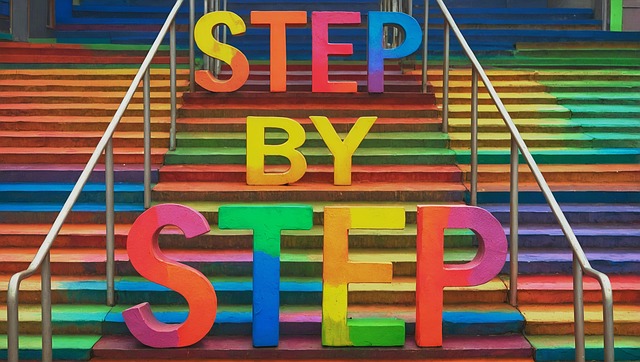
Lesson planning is one of the most important tasks for teachers at every level of education. A lesson plan is not just a schedule for what’s being taught—it’s an itinerary so teachers can plan out their lessons in advance of each year. They plan everything in advance then do whatever needed. Without a good plan in place, lessons are chaotic, students don’t get excited about learning, and learning goals don’t get met. This step by step guide will teach teachers how to plan better lessons that are challenging, organized, and achieve learning goals. For prospective beginning teachers getting ready to teach their first day or experienced teachers who wish to improve their planning abilities, this guide will give you practical information, approaches and examples. —.
Why Lesson Planning Matters
Before we ever get into this step-by-step process, it’s important to understand why lesson planning is important in each step:
- Clear direction – A lesson plan provides direction and structure to the process of teaching, helping teachers focus on focusing on the learning goals to be achieved.
- Better time management – It helps make sure that activities are within the time available for your teaching time, so that lessons are neither too rushed nor too slow.
- Better learning outcomes – You will also create a better learning environment for your students through better learning outcomes, the more activities can take place in an organized, stimulating way and cater to where individual learning comes in.
- Confidence for teachers – When teachers have a plan, they become more ready, and less anxious and particularly when they work with many or mixed groups of kids.
- Adaptability – A lesson plan is something you can pull together and adjust and apply in a learning approach to any unexpected challenge.
To put it simply, good lesson planning is the backbone of successful teaching and learning. —.
A Guide to Creating an Effective Lesson Plan
Step 1: Learning Objectives
The first step in lesson planning is to know what you want your students to learn at the end of the lesson. Learning objectives should be:
- Specific – What exactly are students expected to obtain as an outcome (i.e., “Identify and classify vertebrates and invertebrates”)?
- Measurable — Action verbs that can both be seen and tested (e.g., “list,” “explain,” “demonstrate”).
- Achievable — Establish goals that are attainable for your students.
- Relevant – Relate to the curriculum and to learners’ actual world-action.
- Time-bound – Define what can be achieved within the lesson duration.
Example: Instead of writing, Students understand photosynthesis. Write: “By the end of the lesson, students will be able to describe the process of photosynthesis and create a simple diagram showing light, water and carbon dioxide input.”
—.

Step 2: Know Your Learners
Each class is unique, and one solid lesson plan takes into account the backgrounds, the capabilities and the needs of the participants. Ask yourself:
- What is the age, at what grade level?
- What are they already aware of this issue?
- Are learners with special needs or learning difficulties?
- What learning styles (visual, auditory, kinesthetic) do they use the most?
Identify your learners to create inclusive, engaging, and accessible activities for your students. —.
Step 3: Select the Lesson Structure
The best lesson plans are designed in a way that balances teacher input and student development. A common instructional model is the 5E Model:
- Engage – Grab attention through an activity, story or a question.
- Explore – Allow students to investigate or practice.
- Explain – Articulate important ideas and address misconceptions.
- Elaborate – Go into application, problem solving, or group work.
- Evaluate – Determine that learning objectives were met.
Alternatively, depending on content and grade system, teachers may employ the PPP Model (Presentation, Practice, Production) or a Direct Instruction Model. —.
Step 4: Develop the Introduction (Engage learners)
This is a vital part of the beginning of any lesson as it sets out a tone for what will follow. A strong opening:
- Relates to what you already know.
- Generates curiosity or connectedness to the students real life.
- The lesson goals are clearly stated.
Examples of Introductions: - A science teacher looks at a live plant and wonders: “What do you think this plant uses to live?”
- An English teacher pulls a short video before introducing new vocabulary.
- A history teacher opens with a story about a historical figure to pique interest. —.

Step 5: Choose the Teaching and Learning Activities
Activities must align with objectives and keep students involved. Decent lesson plans cover a variety of methods to appeal to individual learning styles:
- Discussion and Q&A – Develops critical thinking skills.
- Hands-on experiments – Well-suited to science or tech subjects. * Role play or simulations – Help with language, history, or social studies. * Group work or pair work – Encourages collaboration and peer learning. * Games and quizzes – A fun way to reinforce learning. Pro Tip: Plan more activities than you think you will need. If students finish early, you will have backup tasks ready. —
Step 6: Organize Materials and Resources
Before class begins, list everything you need:
- Teaching aids (flashcards, charts, PowerPoint slides, videos). * Classroom materials (notebooks, markers, lab equipment). * Technology tools (projector, smartboard, tablets, apps). Example: If you are doing a group lesson using flashcards, prepare and check them beforehand to avoid wasting time during class. —

Step 7: Plan the Timing
Good lessons are well-paced. Divide your lesson into segments, assigning approximate time to each. For example:
- Introduction & motivation – 5 minutes
- Main teaching/explanation – 15 minutes
- Practice activity – 15 minutes
- Group discussion – 10 minutes
- Conclusion & assessment – 5 minutes
This way you ensure you cover all parts of the lesson before the end. —
Step 8: Assessment and Evaluation
Assessment is how you determine whether students met the objectives of the lesson. It can be:
- Formative (during the lesson) – asking questions, observing group work, quick quizzes. * Summative (end of lesson/unit) – written tests, presentations, projects. Examples:
- After a math lesson, students solve 5 practice problems on the board. * In English, students write 3 sentences using the new vocabulary. * In science, students explain in pairs what they learned about ecosystems. —

Step 9: Plan for Differentiation
Not all students learn at the same pace. Effective lesson plans include differentiation strategies:
- Support weaker students with simpler instructions or extra guidance. * Challenge advanced learners with extension tasks. * Use mixed-ability groups to encourage peer support. Example: In a writing lesson, beginners write short sentences while advanced students write a full paragraph. —
Step 10: Write the Conclusion and Reflection
Use the conclusion to summarize key ideas and reinforce learning.
- Ask students to share “one thing they learned today.”
- Write down the key ideas on the board.
- Provide a brief exit quiz or reflective question.
After teaching the lesson, reflect on:
- What went well?
- What challenges did you face?
- What will you improve next time?
Reflection helps teachers grow and hone their teaching skills. —
Example of a Simple Lesson Plan Template
Subject: Science
Grade: 5
Topic: The Water Cycle
Duration: 45 minutes
- Learning Objectives:
- Students will define the stages of the water cycle.
- Students will draw and label a diagram of the water cycle.
- Introduction (5 min):
- Show a glass of water and ask: “Where do you think this water comes from?”
- Development (25 min):
- Teacher explains the stages of the water cycle using diagrams.
- Group activity: students create their own water cycle poster.
- Practice/Activity (10 min):
- Students work in pairs to explain each stage to one another.
- Conclusion (5 min):
- Quick oral quiz: “What happens when water evaporates?”
- Homework: Write a short paragraph about why the water cycle is important. —
Common Mistakes to Avoid in Lesson Planning
- Planning too much content for one lesson.
- Ignoring students’ prior knowledge and abilities.
- Relying only on teacher talk without student participation.
- Not preparing materials in advance.
- Skipping assessment or feedback at the end. —

Final Thoughts
The ability to create an effective lesson plan is a learned skill. By defining objectives, knowing your learners, structuring activities, assessing progress, and reflecting, you design lessons that are engaging, organized, and effective. A good lesson plan not only makes learning clearer and more meaningful for students but also empowers teachers to teach with confidence. Whether you are teaching in Rwanda, across Africa, or anywhere in the world, the essentials of structured, student-centered lesson planning remain the same: Plan, teach, reflect, and improve.